
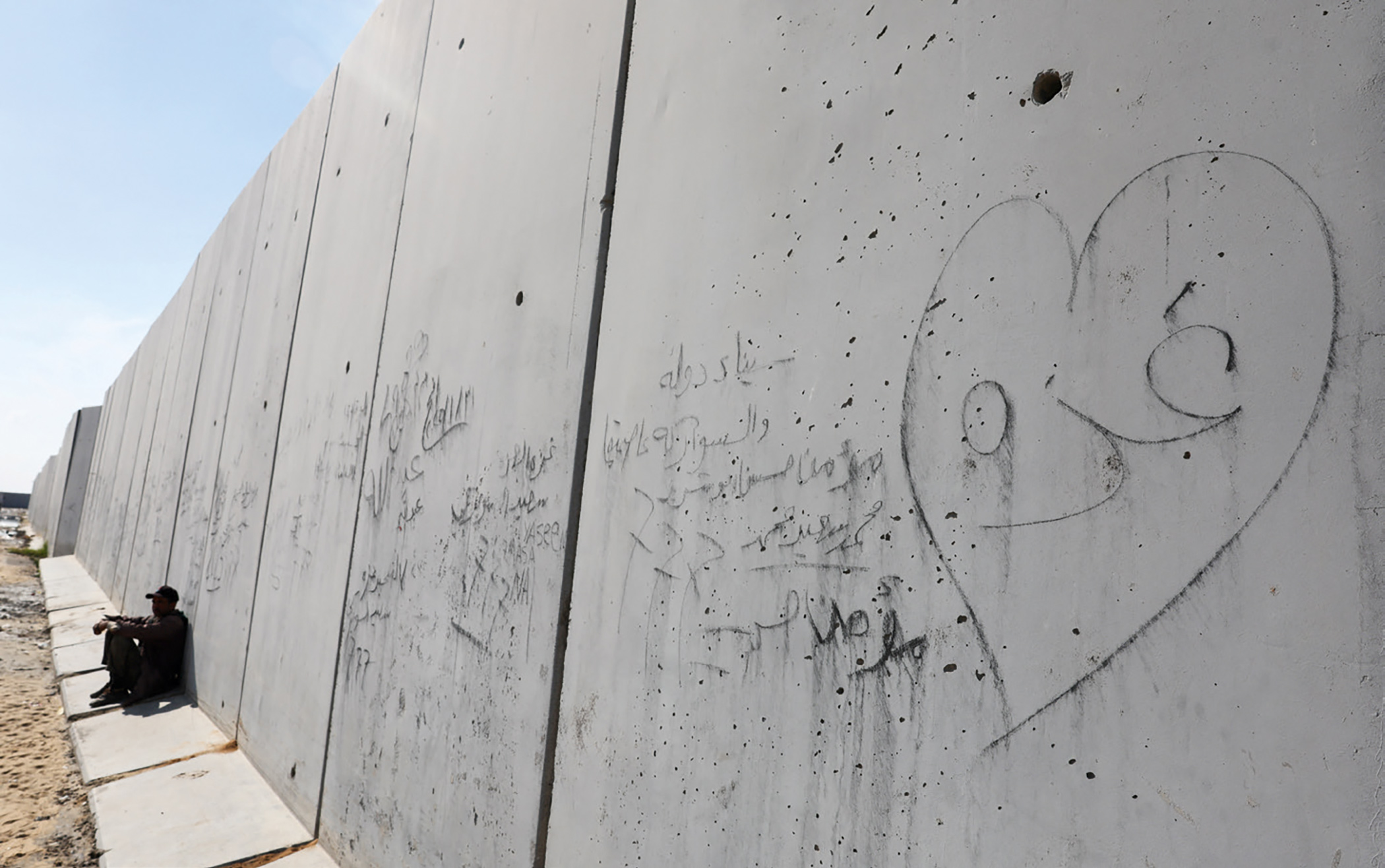
‘We’re still waiting for a place to call home,’ says Khaled Nasrallah, speaking from his temporary residence in Alexandria, Egypt. Nasrallah, his wife and six children are among the more fortunate Palestinians in Gaza, having been evacuated just before Israel closed the borders of the Rafah crossing in May 2024. Their home in Rafah was later destroyed in an attack that the IDF broadcast on social media in June 2024. Since their escape, they have been trying to survive in a country that, although it once administered Gaza and was – until the genocide – home to some 50,000 of Palestinians, has not welcomed them.
It is thought that at least 100,000 residents of the strip escaped into Egypt prior to the Rafah closure in May 2024. Given their cultural and linguistic closeness and widespread popular support for their cause, Palestinians might be expected to find some economic or social stability in Egypt during their displacement. Yet the state prefers to keep Palestinian refugees in precarity – as ‘visitors’ in transit before their putative return or relocation. Palestinians are typically granted 45-day visas that must be perpetually renewed. These deny them the right to work, attend public schools, open bank accounts and benefit from public services.
Despite the genocide on its doorstep, Egypt’s President Abdel Fattah el-Sisi has repeatedly refused to open a humanitarian corridor from Gaza, claiming this would further Israel’s mission of ethnic-cleansing in Palestine – a mission endorsed by Trump in February. El-Sisi has also publicly stated that such a move would ‘liquidate’ the Palestinian – but is doing little to ease the lives of Palestinians within his borders. Since the Rafah crossing was sealed, evacuations have been strictly curtailed. Even during the ceasefire from January to March 2025, only 3,500 Palestinians were allowed to leave Gaza for Egypt.
The Egyptian-owned business agency Hala Consulting and Tourism Services has a monopoly on permitting Palestinians to evacuate Rafah, as well as securing legal status for refugees subject to Egypt’s domestic politics and priorities. With some paying as much as $5,000 per person in fees – and reportedly much more in bribes – to flee to safety, the company was estimated to be making $2 million daily from its ‘transfer’ services at the height of the exodus in April 2024. In this exploitative industry, corruption is rampant: had the Nasrallah family not been able to bribe an official, they tell New Internationalist, their infant baby would have been left behind in Gaza.
In the sweltering streets of Cairo, the elderly parents of another family who evacuated Gaza in 2024 say that whilst they mean to settle in Egypt, they are aware that the country does not want them. Their young adult children are making other plans, dreaming of studying in Europe, while not relinquishing their hope of someday returning to Gaza. Among them, a young dentist says ‘We will go back. I will set up my own dental practice in Gaza and heal my peoples’ wounds.’
