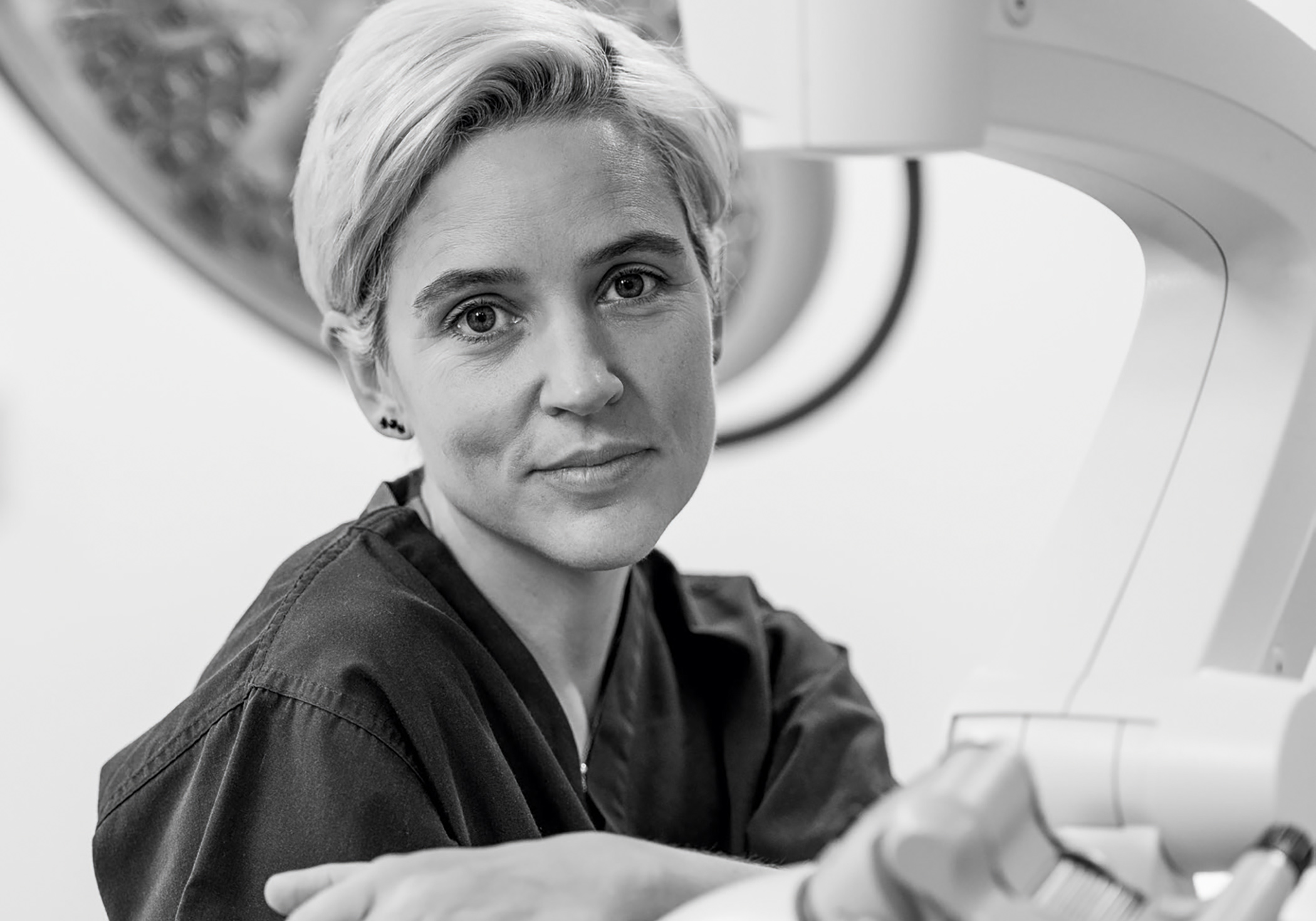
Consultant surgeon Victoria Rose returned to London in June 2025, following her third trip to Gaza since October 2023. As a volunteer plastic surgeon she operated on the survivors of Israel’s relentless bombing of civilian areas, also putting her life on the line. The charity Medical Aid for Palestinians has recorded 1,400 killings of medical workers in Gaza since October 2023.1
The strip now has the highest number of child amputees in the world, per capita, and Rose – who has been volunteering in Gaza for many years – says that the scale of devastation and destruction is worse than anything she has seen before. ‘Around 60 per cent of my surgery involves treating children under the age of 15 who have serious bomb blast injuries, bullet wounds and bone infections,’ she explains.
How did you come to be involved in this medical work in Palestine?
In 2019, I joined a small charity called IDEALS, which supports medical workers during crises. When this war began, a colleague I’d trained with in London who was working in Gaza told me he was overwhelmed by complex trauma patients and did not have enough staff or medical equipment.
What are the main challenges you and other international colleagues face in actually getting into the Gaza Strip?
In March 2024 we went through Rafah, and arrived in Cairo. The World Health Organization (WHO) and United Nations (UN) gave us permission to hire a minibus and pack it with supplies, then we met other medics in the convoy… something like 14 minibuses.
In later trips, we had to come and go through Israel, which could be problematic. The IDF would confiscate our paperwork, try and stop us from catching our flights home and ask us stupid questions about why we wanted to spend our time in Gaza.
It’s not unusual for colleagues who have travelled from across the world to be denied entry via Israel for reasons unexplained – [including] key members of our surgical team of volunteers. Equipment and personal supplies are often confiscated at the border. Israel’s Coordinator of Government Activities in the Territories, the unit which coordinates activity in the occupied Palestinian territories, has made it increasingly difficult for healthcare workers from abroad to gain access to Gaza. They have so many stipulations about who can go, how long you can go for, what you can take in and what situations you must fulfil. As the war has gone on fewer international healthcare workers have been able to get in… There are skilled people across the globe who are prepared to go and help but Israel must let them in… I want to go back, but I fear I’ve have spoken too loudly to be permitted.
When we get into Gaza, it’s always emotional when we meet people we have known from our last trip, people we might have helped. It’s worse when we are told of those who have since been killed. We start operating immediately – there are so many severely injured people, we operate all day and through the night with inadequate equipment, [such as] blunt skin graft blades and scissors without anaesthetic. Between bomb-blasts and gunshots, all you can hear are patients, often tiny children, screaming out in pain – it’s horrific. I worry about not only the physical conditions of these children, but also the mental health impact of all this trauma.
You still work your usual clinics here in Britain for the National Health Service, then use all your accrued holiday leave to work in Gaza. How do you cope with the exhaustion and the fear of the constant bombing?
I have worked on wards, particularly at Nasser Hospital and The European Hospital, while they have been under bombardment by Israel. That is frightening, but what is the alternative? I cope with support from my team, particularly orthopaedic surgeon Graeme Groom, and Palestinian-born plastic surgeon Ahmed Mokhallalati, who has Irish citizenship.
As no Palestinian doctors are allowed in or out of Gaza, they are not able to attend vital conferences to learn new [surgical] techniques. So we train Palestinian doctors ourselves, passing knowledge on – again that is something positive which helps me to cope… that and the faith of the Palestinian people, who have been living under occupation for all this time. None of them have homes now, there’s no clean water, only starvation, death and injury – there is no infrastructure left. Their faith does not wane, but so many of our colleagues have said they would rather die than carry on in this relentless hell. They are exhausted.
‘The only people I have seen with guns in my hospitals are the IDF’
The Israeli authorities have accused Hamas of consuming food and aid meant for civilians. What can you tell me about that?
Propaganda. Like the ‘40 beheaded babies’ or the ‘babies baked in ovens’. I have seen nothing to suggest any of this is true, nor have I been aware of Hamas using any underground tunnels beneath my hospitals… In fact, I have only seen the 3D mock-ups that the IDF propaganda machine has distributed. In May I witnessed Hamas actually stopping desperate people from looting aid trucks and helping organize fair distribution. The only people I have seen with guns in my hospitals are the IDF.
What would you like to say to New Internationalist readers?
I want readers of this interview to take solace that this is being exposed. The global movement to support Palestine is incredible but sometimes I worry that we are a generation who wants a ‘quick fix’, and the solution is not forthcoming as quickly as we want... Apartheid [in South Africa] did not end quickly, but it did end and this will also end. Don’t stop pushing, don’t stop writing to your MP, don’t stop going on marches, don’t stop ‘liking’ those protesters on Instagram, because you are making a difference.
- ‘1,400 healthcare workers killed...’, Medical Aid For Palestinians, 9 May 2025, a.nin.tl/map1400
