
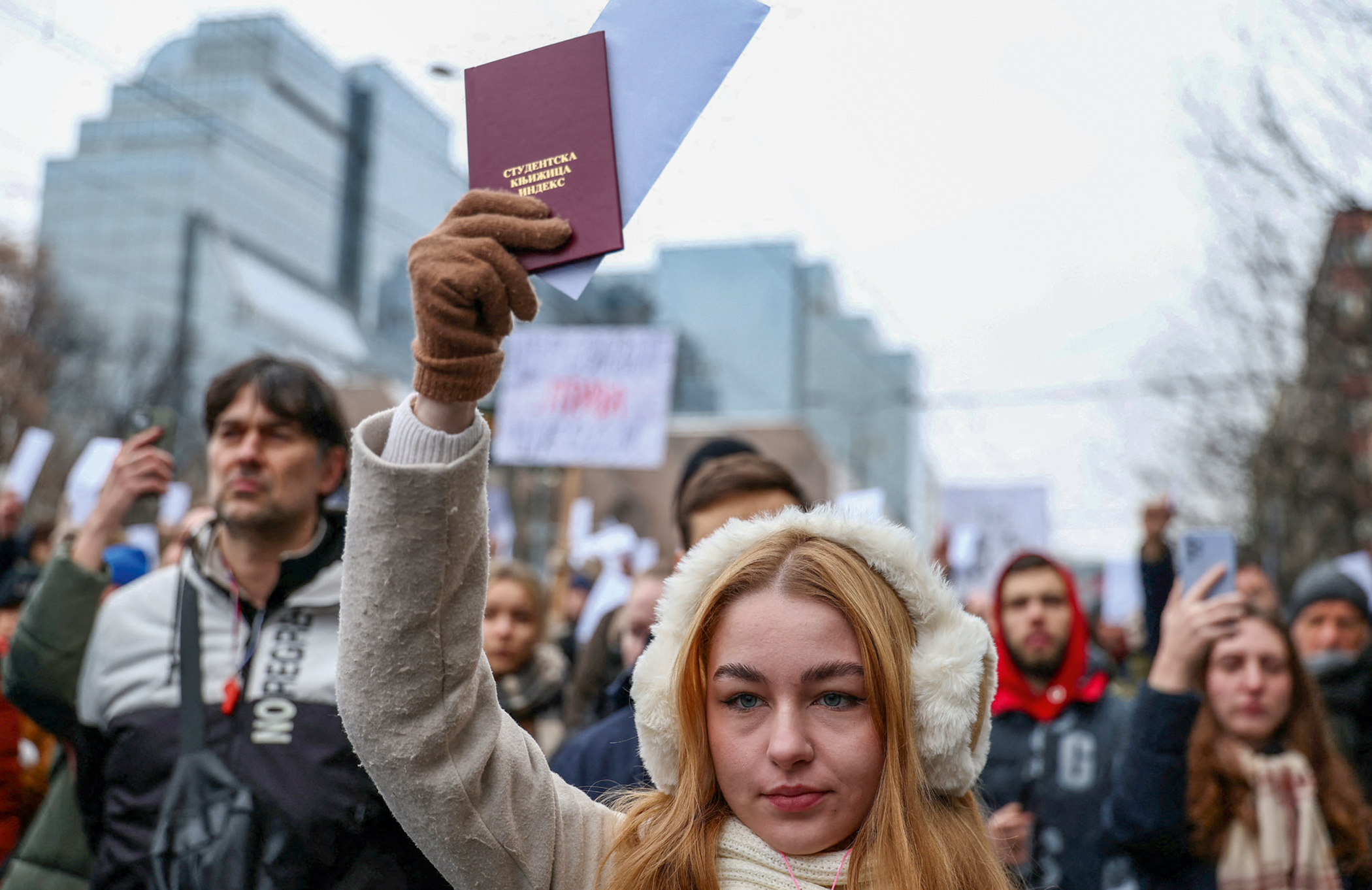
In November 2024, the fatal Novi Sad train station collapse that killed 16 saw large-scale protests for reform and accountability erupt across Serbia. Nine months on, President Aleksandar Vučić has resisted any meaningful concessions. Instead, the student-led movement has met escalating state repression, while Vučić enjoys continued support from West and East. In June, local elections – the first since protests began – in two municipalities brought allegations of vote-buying and other counts of corruption amid heightened arrests.
But faced with unpromising odds, students have not relented, transforming the protests into a national movement. ‘I took part in a protest march from Belgrade to Kragujevac, and I’ll never forget how people welcomed us in each town – sincerely, often with tears in their eyes,’ says Mijat Karamančić, an activist from the faculty of organisational sciences at the University of Belgrade. ‘These are people long forgotten by politics, and students reminded them they are not alone. I truly believe emotions were awakened then that cannot be silenced again.’
The past year saw anti-corruption protests among Serbia’s neighbours – most quickly extinguished – from Hungary’s anti-NGO law demonstrations to the North Macedonian nightclub fire protests. Yet Serbian students have attracted continued public support. With the singular goal of destroying corruption, they have targeted decades of divisive nationalist propaganda, seeking to unify the young population, whether Sunni Muslim, Roman Catholic or Eastern Orthodox.
‘The faculty blockades and student protests have sparked a significant political awakening among the citizens,’ says Dženana Čalaković, a political activist from the University of Belgrade faculty of political science. ‘They broke through apathy and encouraged young people to reflect on the importance of their voice and identity.’ With Vučić refusing protesters’ calls for an early election, the regime’s survival rests on the degree to which allegations of electoral fraud mar the next parliamentary ballot in 2027.
