

Chat Iskandaria
by Fairuz
(Wewantsounds, LP)
wewantsounds.com
★★★★★
Now aged around 90 (her date of birth is disputed), Lebanese singer Fairuz is one of the most celebrated divas of the Arab world. Much of her legendary status rests on her fruitful collaboration with composers and brothers Mansour and Assi Rahbani (she also married the latter). From the 1950s to the 1970s, the Rahbanis revolutionized Arabic vocal music, taking the epic performances of the dominant, orchestral Egyptian style as a starting point and writing much shorter songs in Lebanese dialect, many of which – sung by Fairuz – became evergreen classics.
In the late 1970s and 1980s, Fairuz updated her sound with a clutch of albums, produced by her son Ziad Rahbani, incorporating modern influences like jazz and funk. But on 1987’s Chat Iskandaria – now reissued on vinyl for the first time – she returned to the Rahbanis’ repertoire and a more traditional style featuring swooning strings and clapping hand percussion. Across 11 tunes, the Rahbanis’ genius for arrangement shines through. Alongside the strings, melodies are stated by flutes, oud, zither-like qanun and accordion.
There’s a cinematic quality to many tracks, one moment evoking sighing desert dunes, the next bustling Levantine boulevards. Fairuz imparts tender melancholy to her vocals, rendering each song as a mini-drama of tension and yearning emotion. But these are essentially highly sophisticated pop tunes, also capable of summoning dreamy romanticism on ‘Min Rawabina Al Kamar’ or even ditzy cuteness on ‘Fattehhon Alay’ (both featuring lyrics by Lebanese poet Saïd Aki). In all, it’s a nostalgic and sumptuous collection of timeless beauty, redolent of a golden era of music.
Rwanda Sings With Strings
by The Good Ones
(Glitterbeat, CD, DL, LP)
thegoodonesband.bandcamp.com
★★★★✩
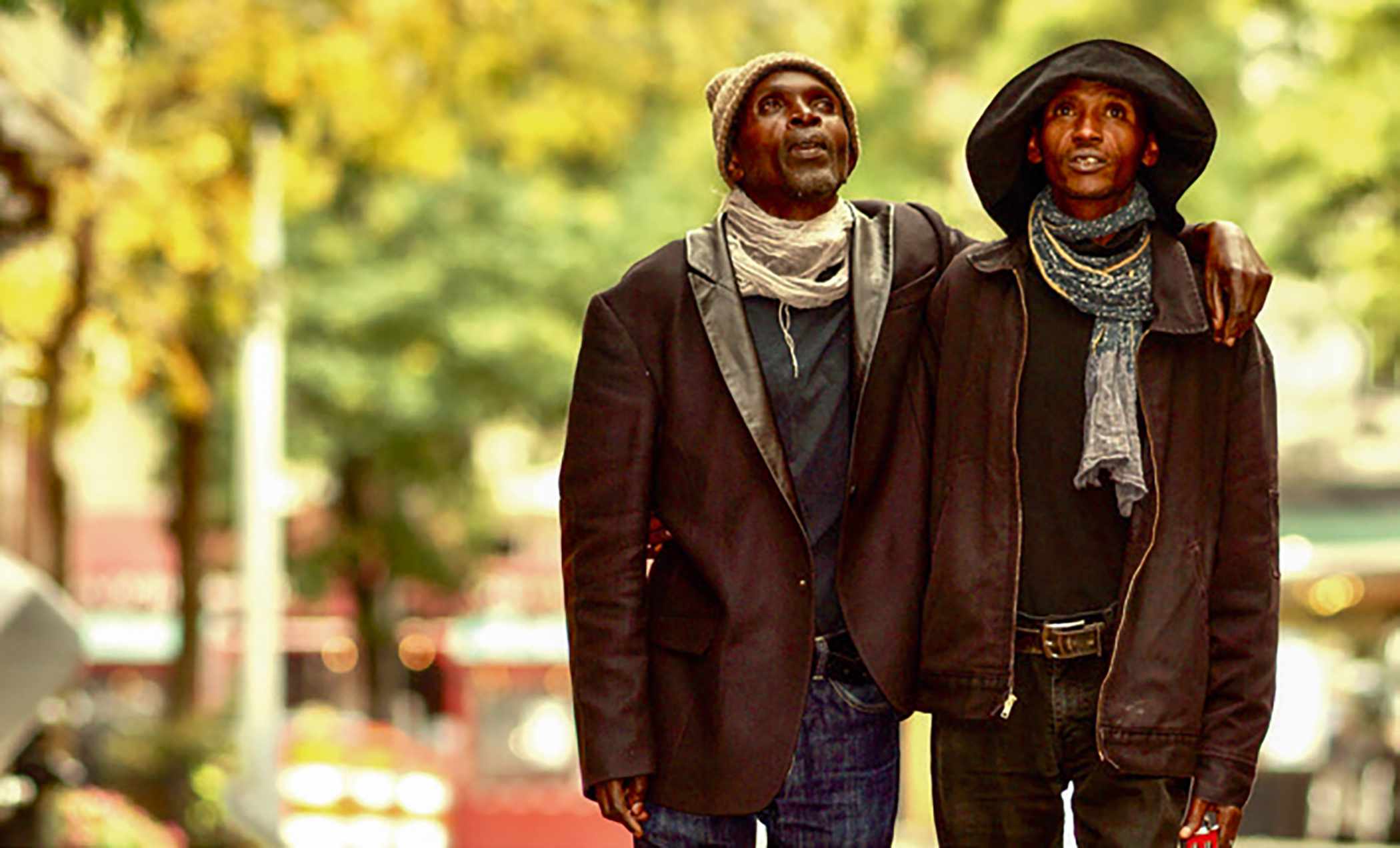
In 2009, renowned US producer Ian Brennan visited Rwanda in search of new music, and encountered The Good Ones. Founded after the 1994 Rwandan genocide, this trio represented an attempt to heal deep wounds: comprising one member each of Rwanda’s previously warring tribes – the Tutsi, Hutu and Abatwa – the name speaks for itself. Singing in the Kinyarwanda tongue, they told tales of love, longing and rural life tinged with the melancholy of loss and violence.
Their 2010 debut Kigali Y’ Izahabu – recorded in one evening on a friend’s back porch – shot them to international fame. They went on to collaborate with Wilco’s Nels Cline and My Bloody Valentine’s Kevin Shields, among others. Now, The Good Ones are reduced to the core duo of guitarist, vocalist and songwriter Adrien Kazigira, with Janvier Havugimana providing backing vocals, tambourine and percussion performed on found items including a paper cup, a bucket and pair of old boots. It’s a simple, raw and emotionally direct sound, with similarities to another hill farm folk music – bluegrass.
As the title suggests, Brennan has introduced an interesting conceit for this latest date: recorded in one take in a hotel room, it features two additional US-based musicians – cellist Gordon Withers and violinist Matvei Sigalov – who were introduced to Kazigira and Havugimana moments before the tape began to roll, and who added spontaneous arrangements to the songs. If the strings are perhaps a little generic, when they soar with the duo’s tight harmonies they add an extra layer of emotional resonance that’s hard to resist.
