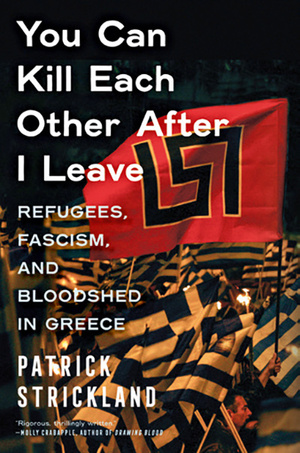
You Can Kill Each Other After I Leave
by Patrick Strickland
(Melville House Books, ISBN 9781685890667)
mhpbooks.com
What sets Patrick Strickland’s new book apart from the many examining the far right is its dual focus: the rise of Greece’s neonazi party Golden Dawn, and the migrants and activists who bore the brunt of its violence and mobilized to stop it.
Ten years of reporting have produced a disturbing, keenly observed account of how Gol–den Dawn evolved from a fringe fascist outfit into the country’s third largest political power. Founded in the 1980s as a pro-Hitler magazine, the group entered Parliament in 2012, capitalizing on Greece’s financial crisis and public discontent as EU-imposed austerity sent living standards plummeting.
Pakistani workers are beaten and burned out of their homes. Leftwing students are bludgeoned. Strickland’s style can be erratic, jumping from atrocity to atrocity, but the effect seems intentional, conveying the relentlessness of Golden Dawn’s brutality.
Most chilling is the state’s role. Police and institutions are repeatedly shown to be ignoring the violence or even shielding the perpetrators. The book’s title – a quote from a police officer as racist abuse was hurled at Afghan protesters – echoes this complicity.
The state finally acted in 2013 when Greek anti-fascist rapper Pavlos Fyssas was murdered by a Golden Dawn member. A five-year trial followed, with the group declared a criminal organization.
Yet the damage was already done. Golden Dawn had inspired fascists around the world, displaced migrant communities in Athens and left a long trail of blood. And its legacy is visible in Greece’s brutal border policies. Yet there is hope to be found in the solidarity networks and legal campaigns that helped force Golden Dawn out of public life.
Amid the far right resurgence worldwide, this is a stark warning of the violence unleashed when fascism enters the halls of power.
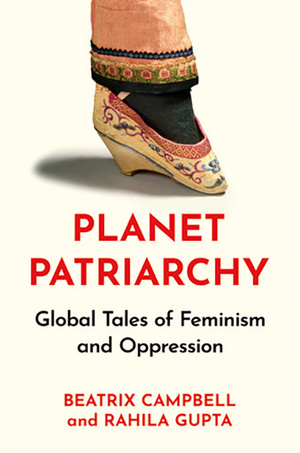
Planet Patriarchy
Global Tales of Feminism and Oppression
by Beatrix Campbell and Rahila Gupta
(Hurst, ISBN 9781805262879)
hurstpublishers.com
‘Why doesn’t patriarchy die?’ was the original title for this timely and ambitious project. It’s a good question and one that Beatrix Campbell and Rahila Gupta – who together clock up almost a century of political activism – are in a good position to tackle.
There are points in history when patriarchy seemed doomed and real gender equality appeared a distinct possibility – the first decade of the Bolshevik revolution, the drafting of South Africa’s ultra-progressive post-apartheid constitution, Iceland’s post-financial-crash run of female leaders – only for the ‘slow poison of patriarchy’ to take hold again.
Is it to do with political systems? Not necessarily. Patriarchy disparages, disempowers and depends on women under various governance methods. As this book shows, it thrives under one-party communism, theocracy and capitalist liberal democracy alike. El Salvador, Syria’s Raqqa (under Islamic State rule), Saudi Arabia, Russia, China, South Africa and Iceland are each put under the microscope with the authors providing political and historical context and analysis.
The details of violence and oppression are as harrowing as the tales of women’s resistance, ingenuity and solidarity are heartening. The authors do not shy away from nuance and complexity, but one clear take-away is that tackling patriarchy in its myriad forms cannot be deferred for fear of ‘weakening’ other causes. The book’s final section considers Rojava, which is a beacon in this regard, being ‘the first revolution driven by the understanding that capitalist modernity cannot be dismantled without tackling patriarchy, racism and environmental damage’. In the face of renewed threats from Turkey, and maybe Syria’s new leadership too, Gupta argues that this feminist revolution needs our ongoing support.
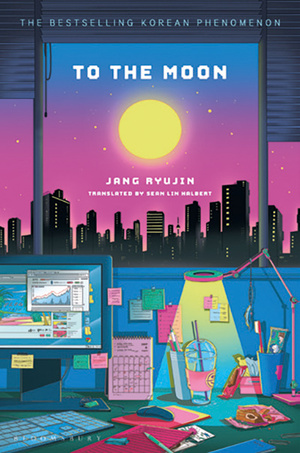
To the Moon
by Jang Ryujin, translated by Sean Lin Halbert
(Bloomsbury, ISBN 9781526685711)
bloomsbury.com
Jang Ryujin’s debut novel follows three women working at a Seoul confectionery company, ground down by endless office drudgery and the mirage of promotion. Disillusioned with their stagnant careers, they turn to investing in ethereum, a fictional cryptocurrency that offers a glimpse of financial freedom.
Narrator Dahae endures relentless night shifts designing team T-shirts, only to return to a cramped one-room flat without so much as a ledge separating the shower from the apartment. Her friend Eunsang, always chasing the next get-rich-quick scheme, goes all in on crypto. The more cautious Jisong hesitates – but eventually follows suit.
The novel is sharply observed, capturing the quiet despair and absurdity of modern corporate life with biting wit and empathy. Ryujin critiques the oppressive structures of office culture – which apply not just in Seoul, but universally – with a light, knowing touch.
But To the Moon is no cautionary tale about cryptocurrency. If anything, its breezy tone might leave even the most risk-averse reader idly wondering whether they, too, should be watching the markets.
Cryptocurrency here isn’t the focus, but a narrative device – a symbol of escape, of sudden possibility. Ryujin is more interested in exploring what financial freedom means, and how the idea of ‘enough’ can remain endlessly elusive, always shifting just out of reach.
Ultimately, To the Moon isn’t about crypto so much as the emotional and economic stressors of everyday life. It’s a gripping, quietly funny, and perceptive novel – one that offers a fresh lens on office culture, millennial disillusionment and the fragile solidarity between people dreaming of something more.

In Transit
by Brigid Brophy
(Lurid Editions, ISBN 9781739744175)
lurideditions.com
Brigid Brophy loved air travel. She took her daughter to watch Concorde’s inaugural flight and kept a model aeroplane resting on her writing desk. In her 1969 novel In Transit, reissued this year by Lurid Press, a small publisher that specializes in ‘reprints that refuse to fit in’, she soars ahead of her time in an experimental and thoroughly camp caper.
The airport departure lounge becomes a kind of Eden for Brophy’s protagonist Pat – an Irish orphan living in England, who purposefully misses their flight and discovers that they have forgotten their sex. As a consequence of an unfortunate coffee stain on their passport, Patrick/Patricia – legally known by the androgynous name Evelyn Hillary O’Rooley – is unable to verify whether they are male or female.
Pat’s odyssey is a delightful celebration of the possibilities and expanded horizons offered by the 20th century. The novel’s mystery unfolds as a romp as Pat traverses the strange, transient environment of the airport where language and culture are unfixed and uncommon, in the hope of landing on their identity. As interesting as Pat’s ‘sexual amnesia’ is their relationship to patrimony. Refusing to travel home to England, Pat dwells on their status as a double orphan (two sets of parents killed, somewhat ironically, in plane crashes) and on being dislocated from their birthplace of Ireland.
Puns, double entendres, Freudian slips and playful textual arrangement carry the story along a slightly overshot flight path of metonymy and metaphoric transposition – to the point of the reader’s patience running out of fuel. But all of Brophy’s indulgences are forgiven. In Transit is a novel so thoroughly forward thinking in both its form and content that she would be hailed as a prophet even today.
